
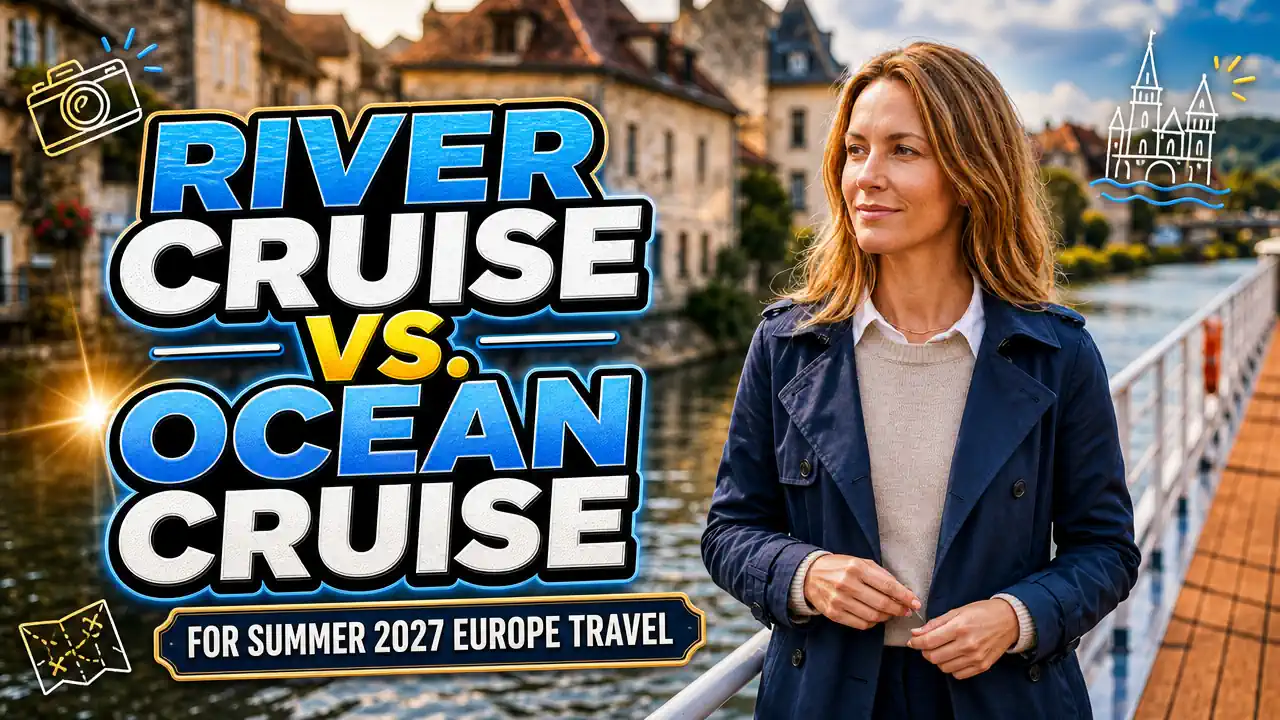
Choosing a river cruise or an ocean cruise for Summer 2027 Europe travel usually comes down to one practical question: do you want the ship to be your destination, or your route into it?
River vessels keep the focus on towns, vineyards, museums and scenic views from breakfast to bedtime. Ocean ships bring bigger entertainment, more dining and a far wider choice of family-friendly cruises.
This guide compares the pace, cruise itineraries, onboard amenities, costs and travel experiences so you can match the right sailing to your travel preferences.
Key Takeaways
- Choose a river cruise if you value central dockings, daily cultural experiences, smaller guest numbers and a calmer onboard rhythm.
- Choose an ocean cruise if you want pools, theatres, several restaurants, children's facilities and more choice on sea days.
- River cruises in Europe commonly last 7 to 10 nights, while ocean cruise duration can run from a short two-night break to a multi-week voyage.
- Compare what the fare includes before booking. A higher river fare may cover more excursions, drinks, Wi-Fi and transfers, while an ocean fare may leave more room for paid extras.
Key Differences Between River Cruises and Ocean Cruises
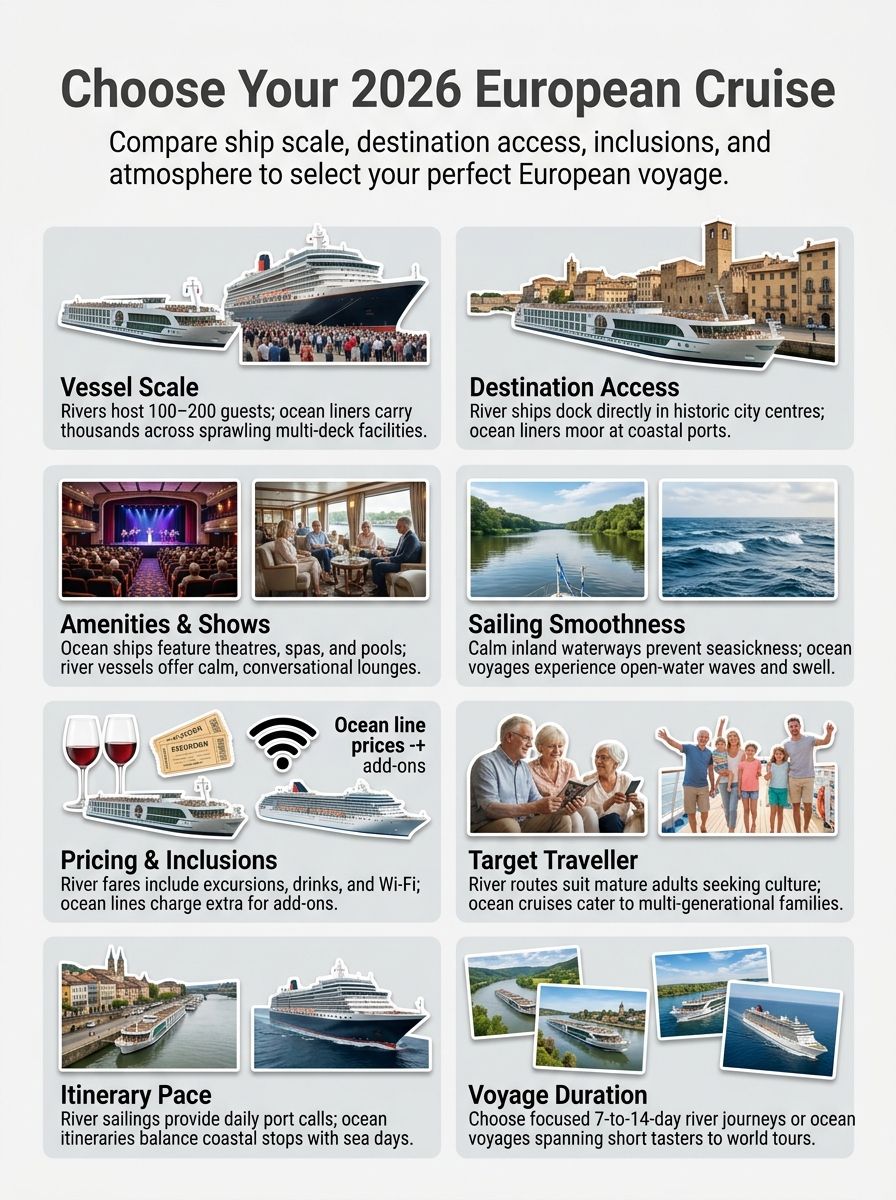
River cruises and ocean cruises create very different holidays, even when both visit Europe. A river ship follows waterways such as the Seine River, Danube, Rhine or Douro, while an ocean ship links coastal cities, islands and fjords across a much larger area.
The key distinction is simple: river travel gives you frequent access to places on land, while ocean travel gives you more space and choice at sea.
Ship Size and Capacity
Ship size affects almost everything, including the atmosphere, how quickly you get to know other guests and the number of places you can eat, relax or be entertained.
| Aspect | River Cruises | Ocean Cruises |
|---|---|---|
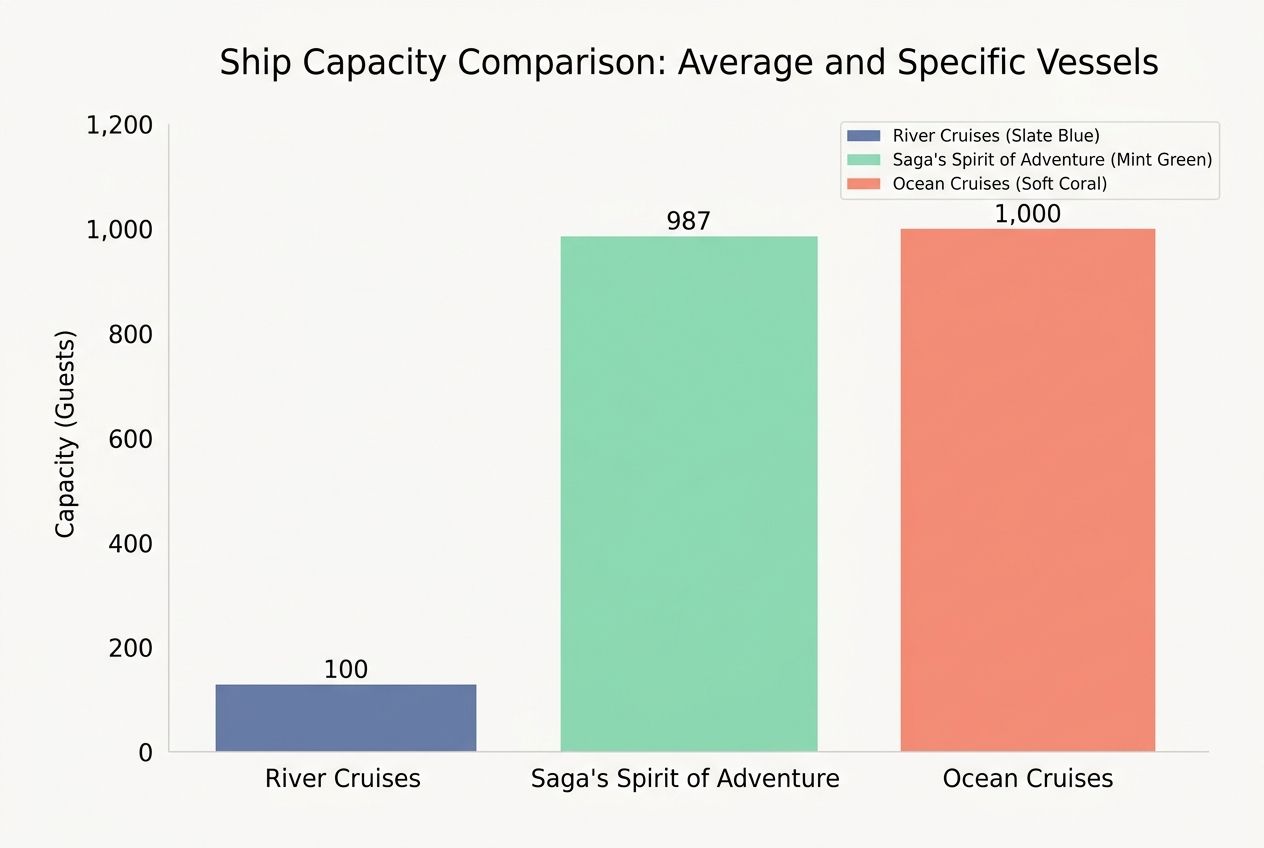
| Typical guest numbers | Usually about 100 to 200 guests on European river vessels. | Often 1,000 guests or more, with the largest ships carrying several thousand. |
| Onboard feeling | Quiet, sociable and familiar after a day or two. | Busier, more varied and similar to a floating resort. |
| Cabin choice | Fewer cabin grades, with French balconies or full balconies common on newer ships. | Broad choice, from inside cabins to suites, family cabins and accessible rooms. |
| Where ships can go | Can pass through locks and reach inland towns that large ships cannot access. | Can cross open seas and call at islands, fjords and coastal cities. |
For a useful UK comparison, Saga's Spirit of Adventure carries a maximum of 987 guests, which is small by ocean-cruise standards but still far larger than a typical river ship. That extra scale creates room for a theatre, spa, promenade deck and several restaurants.
If you enjoy seeing familiar faces and prefer a simple layout, choose river cruises. If you like having several venues to try each evening, an ocean cruise will suit you better.
Destinations and Itineraries
European river cruises concentrate on a connected region. A Danube route can link Austria, Hungary and Slovakia, while the Rhine, Moselle and Douro combine historic towns with vineyard scenery.
Ocean cruise itineraries cover a much wider map. From UK ports, you can sail to Norway, the Baltic, Spain, Portugal, the Mediterranean, Ireland or the Canary Islands without changing hotels.
| Travel feature | River Cruises | Ocean Cruises |
|---|---|---|
| Best-known routes | Seine, Danube, Rhine, Moselle and Douro. | Norwegian fjords, Mediterranean, Baltic, British Isles, Ireland and Canaries. |
| Port pattern | Often one stop each day, with some overnights in major cities. | Mix of port days and sea days, depending on distance between destinations. |
| Access | Frequently dock close to town centres. | May use a commercial port, shuttle or tender boat for some calls. |
| Best for | History, food, art, wine regions and relaxed cultural experiences. | Coastal scenery, islands, varied countries and longer-distance travel. |
A 2027 Saga river programme includes sailings on Spirit of the Rhine, Spirit of the Danube and Spirit of the Moselle, which launched in July 2025. These routes are built around included visits in cities, towns and villages rather than long stretches at sea.
Before you compare cruise lines, inspect the actual port timetable. An overnight stay in Bordeaux, Vienna or Lisbon can be more valuable than a long list of ports with only a few hours ashore.
Onboard Amenities and Activities
This is where the difference becomes most obvious. River ships treat the vessel as a comfortable base, while ocean ships can make onboard activities a major part of the holiday.
| Category | River Cruises | Ocean Cruises |
|---|---|---|
| Dining | Usually one main restaurant, sometimes with a smaller speciality venue. | Several included and speciality restaurants, cafés, bars and casual options. |
| Entertainment | Local music, talks, tastings and low-key evening performances. | Theatres, live music, quizzes, production shows, casinos and themed events. |
| Wellness | Small fitness areas and sun decks are common. | Spas, gyms, pools, salons and larger outdoor deck areas. |
| Family facilities | Often adult-focused, with age rules varying by cruise line. | Children's clubs, waterslides, sports areas and family accommodation on many ships. |
Saga's Spirit of Adventure shows what a boutique ocean ship can offer. Its facilities include a large theatre, all-inclusive bars, a spa, an alfresco lido and speciality restaurants, including Khukuri House and Amalfi.
Royal Caribbean's Summer 2027 sailings from Southampton take the resort-style approach further, with Liberty of the Seas offering family-focused activities alongside European cruise itineraries.
Pick river travel if the places you visit matter more than the number of things you can do on the ship.
Duration of Cruises
River cruises often work well for a one-week holiday. Seven, eight and 10-night sailings are common, giving you a new town, city or excursion on most days.
Ocean cruise duration is far more flexible. You can book a short UK departure for a first taste, a seven-night Norwegian fjords trip, or a longer Mediterranean, transatlantic or world voyage.
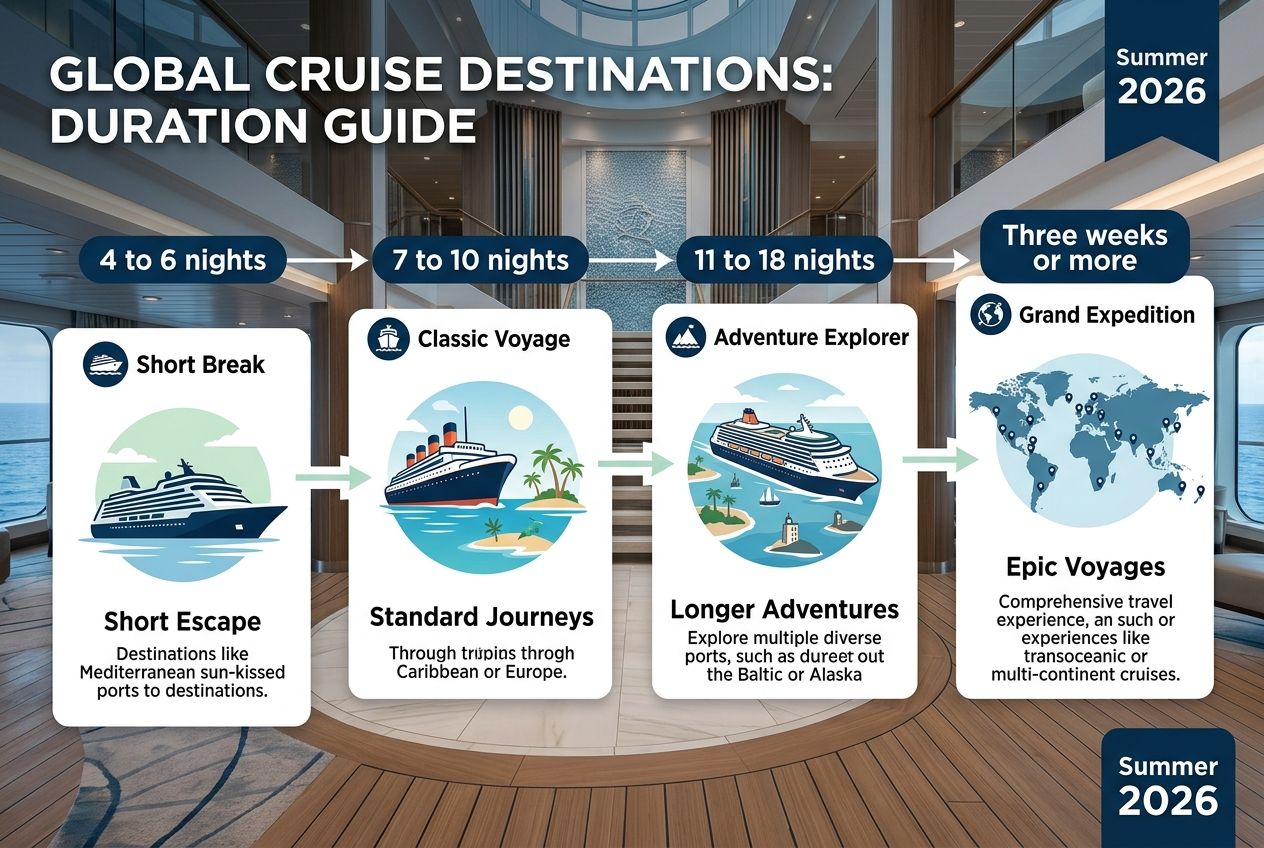
- 4 to 6 nights: best for testing whether you enjoy cruising or fitting a break around work.
- 7 to 10 nights: a strong choice for European river cruises and mainstream ocean routes.
- 11 to 18 nights: useful for deeper regional exploration, such as Iberia, the Baltic or the eastern Mediterranean.
- Three weeks or more: better for guests who enjoy sea days and want to cover several regions in one holiday.
For Summer 2027 Royal Caribbean lists UK sailings from Southampton ranging from short breaks to 14-night itineraries. River travel is usually more port-intensive, so even a seven-night voyage can feel full.
Advantages of River Cruises
A river cruise suits travellers who want a slower pace without wasting time. You unpack once, wake up close to the next destination and spend most days focused on the places along the route.
Intimate and Relaxed Atmosphere
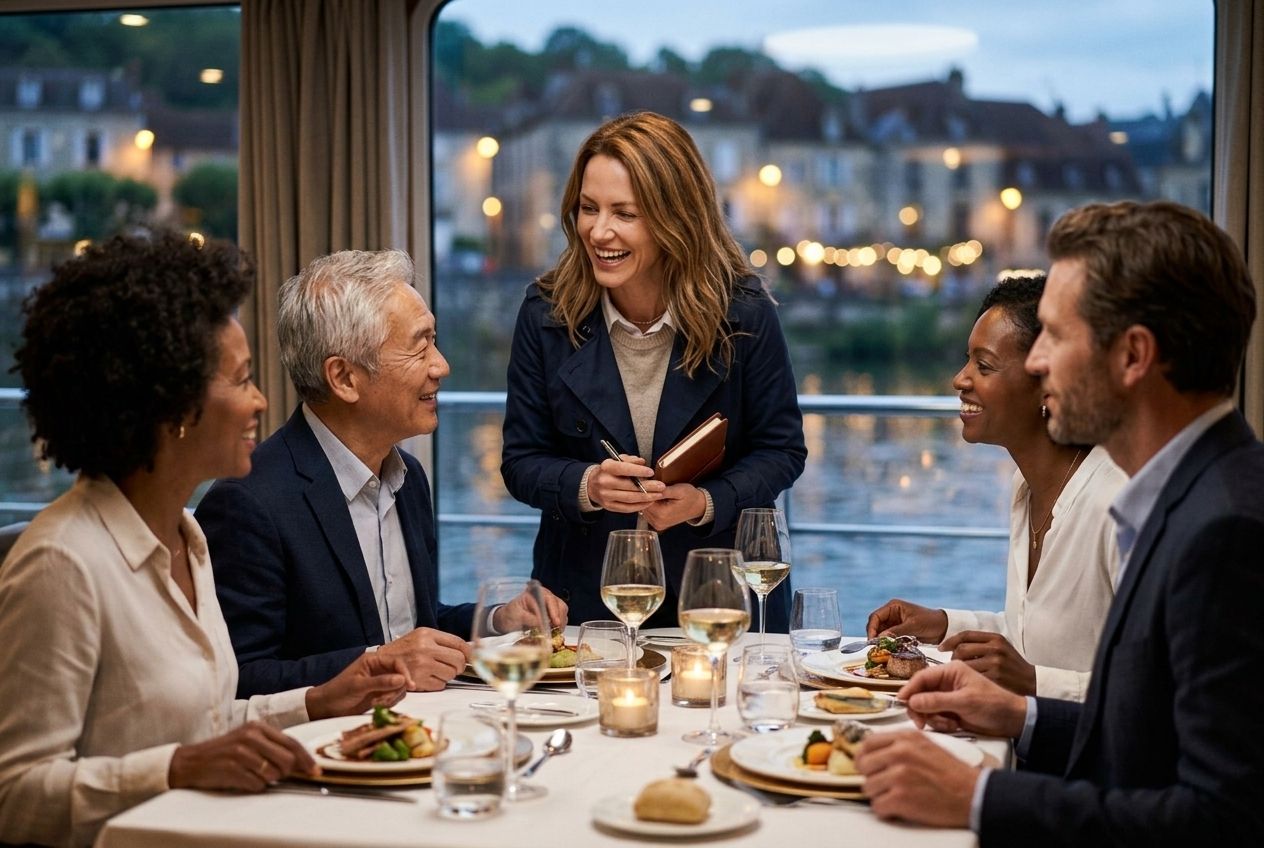
Small ships make it easier to settle in, meet people and keep the holiday simple.
With roughly 100 to 200 guests, river cruises feel personal without being formal. You will soon recognise fellow guests in the lounge, on excursions and at dinner.
That smaller scale also limits noise and queues. You are less likely to face competing entertainment venues, crowds around a pool or a long walk to your evening meal.
Solo river cruises can be especially appealing because the social side develops naturally through shared tours and open dining. Still, check the single supplement carefully, as it can vary sharply by sailing and cabin type.
- Pick a river ship if you prefer conversation over late-night nightlife.
- Choose a sailing with included excursions if you do not want to organise daily transport.
- Ask about dining arrangements if you would rather join shared tables than dine alone.
- Check the line's age policy before booking, especially if you are travelling with younger relatives.
Access to Unique Inland Destinations
The strongest case for river cruises is access. Rivers run through the centre of many European towns, so you can often step ashore and start exploring without a long coach transfer.
On the Seine, river cruise itineraries can pair Paris with Rouen, Les Andelys, Giverny and Normandy. On the Douro, you can travel through Portugal's wine country before extending your holiday into Spain for Salamanca.
These routes make cultural experiences easier to fit into one week. You can visit a cathedral, join a guided walk, try regional food and return to the same cabin before dinner.
Use the excursion list as a test of quality. A good itinerary should show what is included, how active each visit is and whether you have free time after the guided element.
All-Inclusive Experiences
River fares can look expensive at first glance, but they often include more of the holiday. The important task is to compare the final cost, not the lead price.
Saga states that its exclusive river ships include onboard dining, selected local drinks, Wi-Fi and gratuities in the fare. Its 2027 programme also includes selected regional flights without an extra charge on certain river sailings.
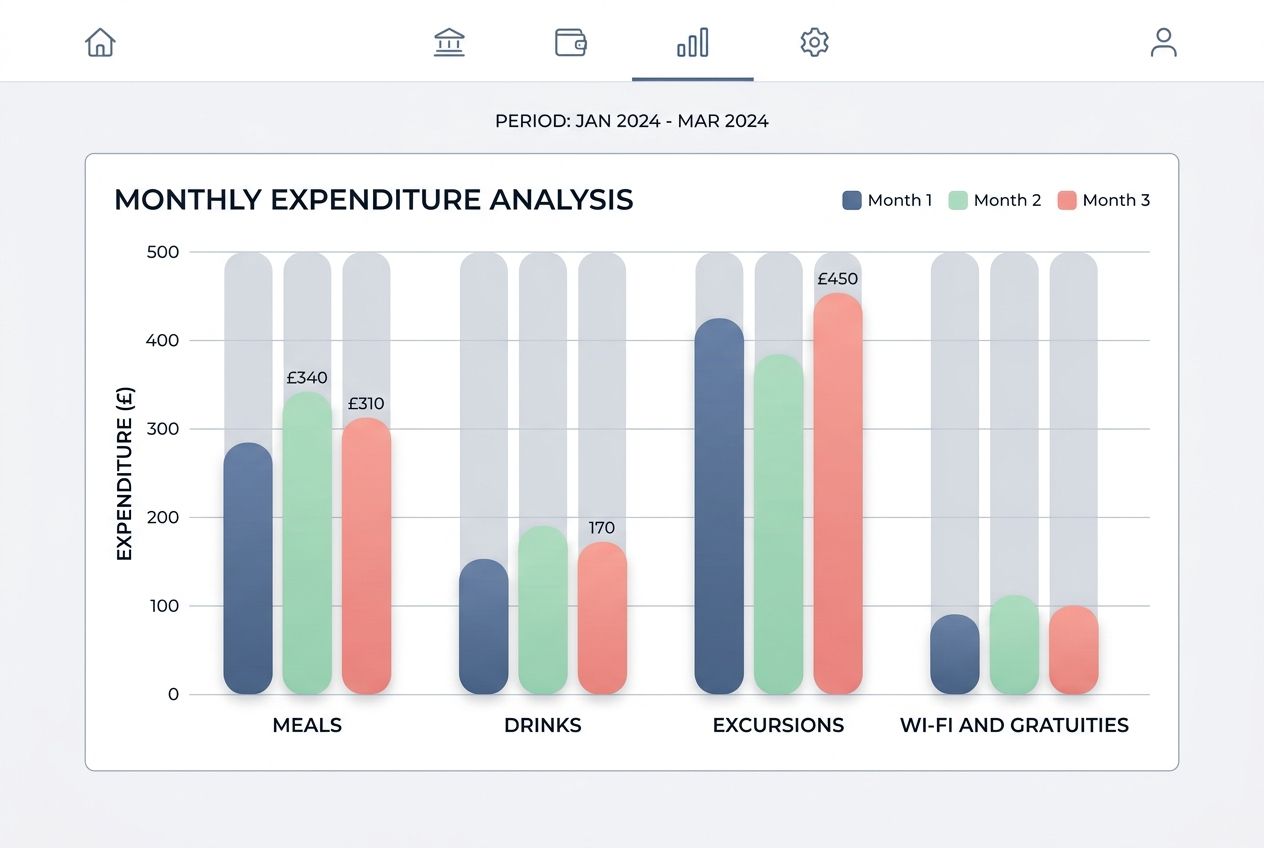
| Cost area | Often included on river cruises | Often extra on ocean cruises |
|---|---|---|
| Meals | Usually included. | Core dining included, speciality venues may cost extra. |
| Drinks | May include wine with meals or a wider drinks package. | Usually charged separately unless a package is included. |
| Excursions | Often includes selected guided tours. | Usually charged per excursion. |
| Wi-Fi and gratuities | Frequently included on premium river lines. | May be charged separately, depending on the fare. |
Read the inclusions line by line. All-inclusive drinks may mean selected house drinks at set times, not every premium brand in every bar.
Smooth Sailing and Minimal Motion
River vessels travel on sheltered waterways, so they usually experience far less movement than an ocean ship. This makes river travel a sensible choice for guests who worry about seasickness.
You may still feel gentle vibration, movement in locks or a slight wake from passing boats, but you will not face the open-water swell found in the Bay of Biscay, the North Sea or the Atlantic.
If motion sensitivity has affected past holidays, choose a centrally located cabin and speak to your pharmacist or GP about suitable remedies before you travel. You should still pack medication, because coach transfers, flights and winding shore roads can also trigger nausea.
Advantages of Ocean Cruises
An ocean cruise gives you range. It can combine several countries, sea days and a busy shipboard programme in one holiday, which is hard for river cruises to match.
Larger Ships with More Facilities
Large ships have room for facilities that simply will not fit on a river vessel. That can include several pools, sports decks, theatres, lounges, spas, shops and restaurants.
For travellers who want choice, this matters. You can spend a sea day reading in a quiet lounge, joining a class, booking a treatment, watching a show or sitting by the pool.
Saga's Spirit of Adventure is a useful middle ground. It carries up to 987 guests, includes a balcony with every cabin and offers a more intimate feel than the largest ocean ships while keeping the benefits of a theatre, spa and multiple restaurants.
Wide Range of Dining and Entertainment Options
Ocean ships make evenings easy because you have more options. You might choose a main dining room one night, a speciality restaurant the next, then live music or a theatre performance afterwards.
That variety works particularly well for groups with different tastes. One person can relax at the spa while another joins a quiz, watches a show or spends time at the pool.
- Check whether speciality dining is included or charged separately.
- Reserve popular restaurants and headline shows early, especially on larger ships.
- Look at the daily programme before booking if onboard activities are a deciding factor.
- Choose a quieter cabin location if late-night venues or pool-deck music may disturb you.
Royal Caribbean includes access to many attractions, select dining venues and entertainment in its core fare, but packages and speciality options can add to the final bill. Build a realistic spending allowance before you book.
Exotic Coastal Destinations
Ocean travel suits travellers who want coastlines, islands and wider geographic variety. A single sailing can combine Norway's fjords, Denmark, Spain, Portugal or the Mediterranean, depending on the route.
It also gives UK travellers the option to sail directly from Southampton. That can remove the need for flights and simplify baggage arrangements, especially for a family holiday.
For Summer 2027, Liberty of the Seas is scheduled to sail from Southampton on European routes that include Norway, Spain, Portugal and France. Check the exact embarkation port and travel time from home before choosing a no-fly cruise.
Variety of Cruise Lengths
Ocean cruise lines offer more flexibility on duration because they can cover short regional breaks as well as long international voyages. That helps if you want to fit holidays around school dates, work commitments or a larger Europe trip.
A short sailing can be a practical first cruise. A 10 to 14-night voyage gives you more time to settle into ship life and makes longer-distance routes feel less rushed.
If you want to combine sea and land travel, look for a Cruise & Stay package. Adding hotel stays before or after the cruise can give you time to explore a departure city without relying on same-day flights.
Considerations for First-Time Cruisers
First-time cruisers make better choices when they compare the whole holiday, not just the ship or headline fare. Start with the route, then check practical details such as insurance, transfers, passport rules and spending money.
Budget and Cost Comparison
River cruises usually ask for more upfront because more items may be included. Ocean cruises can start at a lower price, but drinks, Wi-Fi, gratuities, restaurant supplements and excursions can change the total quickly.
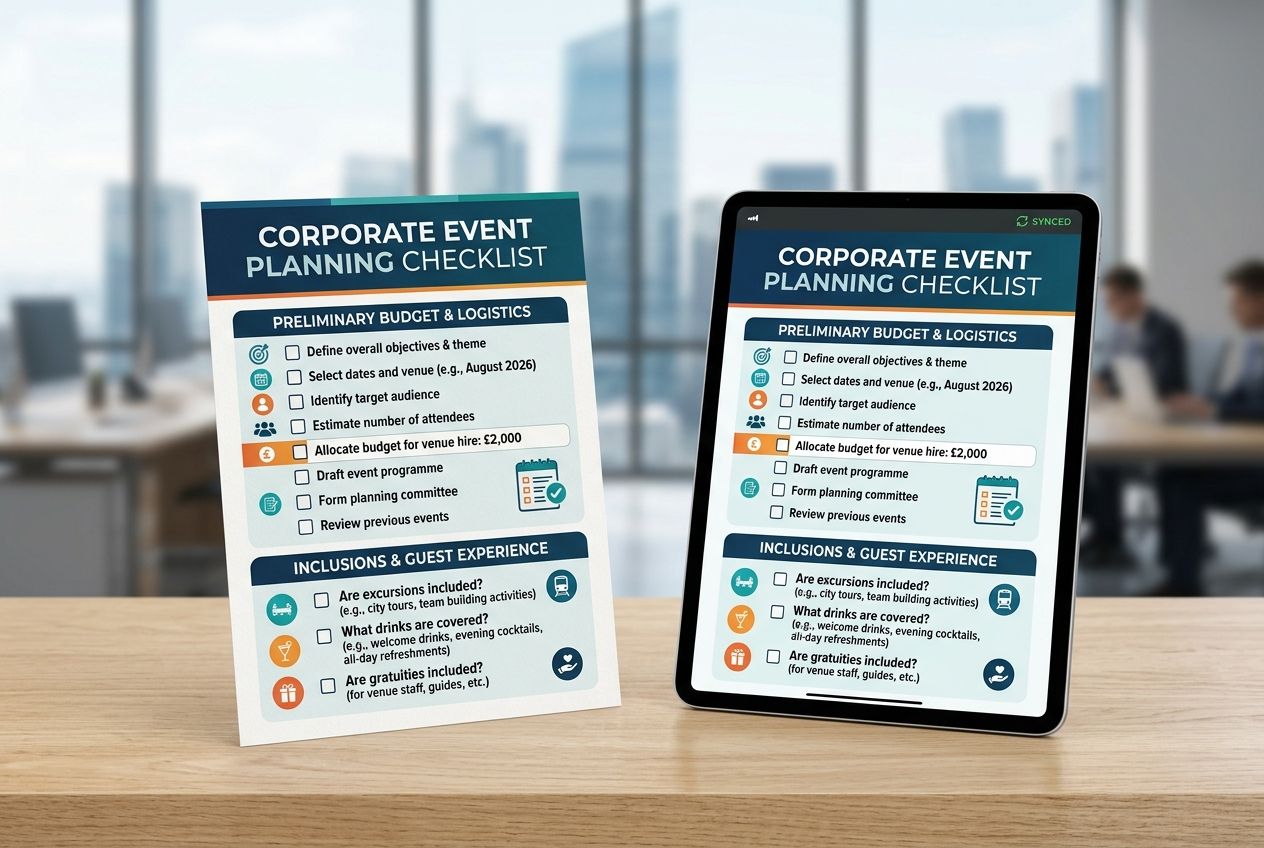
| Question to ask | Why it matters |
|---|---|
| Are excursions included? | Daily sightseeing can become a major extra cost on a port-intensive trip. |
| What drinks are covered? | A package may include selected drinks only, with premium choices charged separately. |
| Are gratuities included? | This avoids an unexpected daily charge at the end of the holiday. |
| Does the fare include flights or UK travel? | Transfers, luggage and airport costs can alter the value of a fare. |
| What does travel insurance cover? | Medical care, cancellation, missed departure and cruise-specific disruption need checking. |
As of August 2027, Saga advertises seven-night European river cruises from under £2,000 per person on selected departures, while prices vary by route, cabin and availability. Treat every “from” fare as a starting point, then price the cabin, travel and extras you actually want.
For UK travellers, check passport validity for each country on the itinerary before paying the balance. Travel insurance should cover cruise-specific issues such as missed ports, medical treatment and getting home if your plans change.
Travel Preferences and Expectations
Your ideal cruise should reflect how you like to spend a normal holiday. If you enjoy early starts, walking tours, local food and museums, river cruises may feel rewarding from day one.
If you prefer variety, sea views, pool time and a different evening venue every night, ocean travel gives you more options. It is also the clearer choice for most family-friendly cruises.
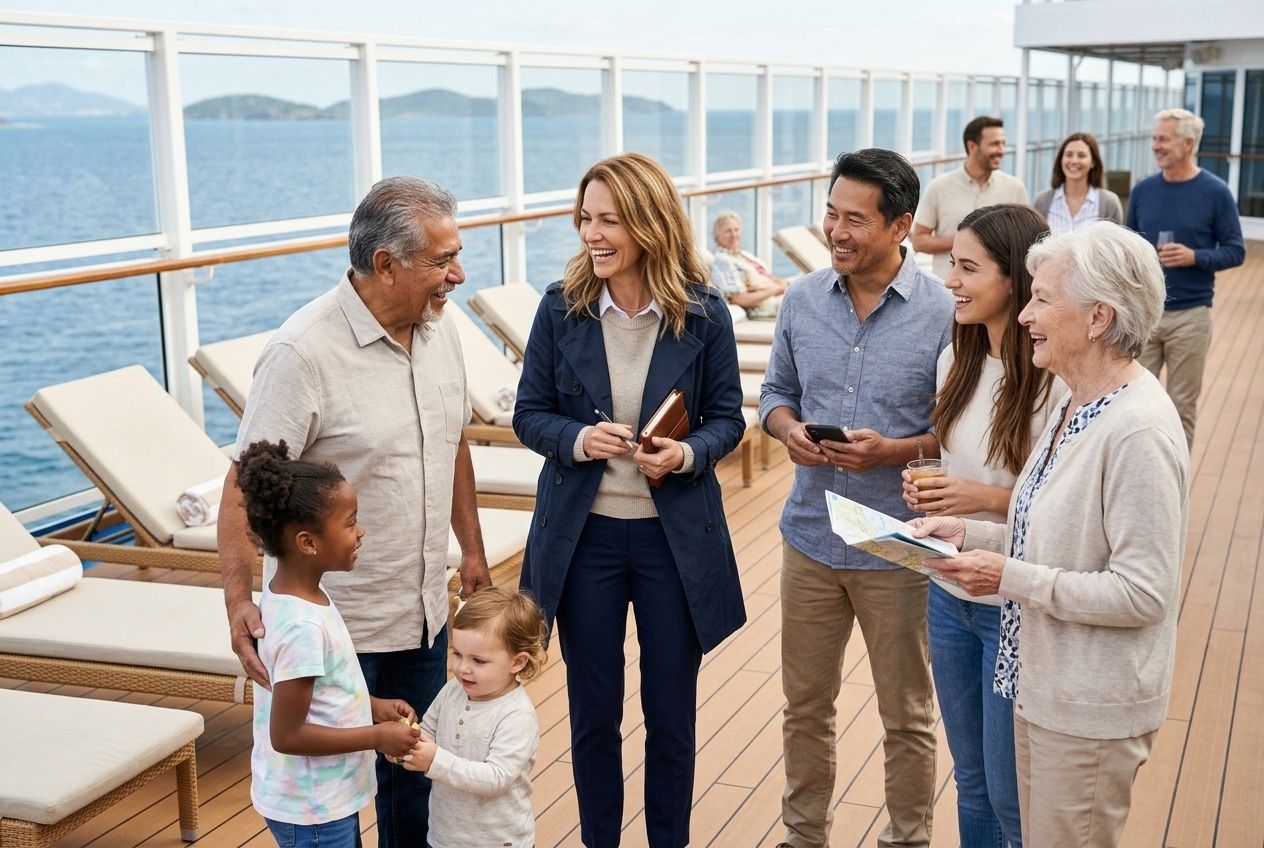
Pick the itinerary first, then choose the ship that supports the way you want to travel.
River cruises suit couples, friends, solo travellers and culture-focused groups. Ocean cruises work well for multi-generational groups because each person can build a different day without leaving the ship.
Seasickness and Motion Sensitivity
River cruising is the lower-risk option for motion-sensitive travellers because inland waterways are sheltered. You can still take sensible precautions, especially if you are affected by travel sickness on coaches, flights or smaller tender boats.
Ocean ships use stabilisers, but they cannot remove all movement in rough weather. Cabin position matters, with lower and more central cabins usually feeling less motion than cabins high up or far forward.
- Choose a river cruise if avoiding ship movement is your top priority.
- On an ocean cruise, book a midship cabin on a lower deck if available.
- Carry remedies recommended by a pharmacist or GP before you leave home.
- Spend time in fresh air and look at the horizon if you begin to feel unwell.
FAQs
These answers cover the questions most UK travellers ask before comparing river cruises and ocean travel for Europe.
Are river cruises more expensive than ocean cruises?
River cruises often cost more upfront, but they may include excursions, drinks, Wi-Fi, gratuities and transfers. Ocean cruises can offer a lower entry price, then charge separately for several of those items.
The better value depends on your habits. If you plan to book guided tours, use Wi-Fi, drink regularly and try speciality dining, calculate those extras before choosing the cheaper-looking fare.
Which cruise is better for families?
Ocean cruises are usually better for families because many ships offer children's clubs, pools, sports areas, family cabins and flexible dining. Royal Caribbean's European programme from Southampton is one example of a line built around shared onboard activities.
River cruises often focus on adults and cultural sightseeing, and some lines have minimum-age rules. Check the policy for the specific ship rather than assuming every river cruise is unsuitable for younger travellers.
Can you combine river and ocean cruises in one trip?
Yes. You can combine river travel with an ocean cruise by adding hotel stays, rail travel or a flight between the two parts of the holiday.
A practical option is to take a Danube or Rhine river cruise first, spend a few nights in a major city, then join an ocean sailing from a coastal port. Leave at least one night between independently booked travel arrangements so a delay does not disrupt the next part of your trip.
Conclusion
Choose a river cruise for calm sailing, scenic views, central dockings and cultural experiences that fill each day without making the ship the main attraction.
Choose an ocean cruise for bigger onboard amenities, family-friendly cruises, more dining and entertainment, plus the freedom to cover coastlines and islands across Europe.
The best Summer 2027 Europe holiday is the one that matches your travel preferences, budget and preferred pace. Compare the real itinerary, cabin, inclusions and likely extras before you book.
FAQs
1. Which is better for Summer 2027 Europe travel, a river cruise or an ocean cruise?
Choose by your itinerary and ship size, not by trend. River cruises place you close to towns on calm waters and suit a relaxed pace, while ocean cruises visit many coastal ports, offer more facilities, and suit travellers who like busier ships and varied on-board activities.
2. Will I see more ports on a river cruise or an ocean cruise?
River cruises stop often at riverside towns and inland cities, so you visit many local places in a short time. Ocean cruises call at larger coastal ports and cover wider sea routes.
3. Is a river cruise or ocean cruise cheaper for Summer 2027 Europe travel?
Ocean cruises can have lower base fares and frequent deals, which cuts the upfront cost. River cruises often include meals, transfers and shore excursions in the price, so total cost can match or exceed the ocean option.
4. How do I choose between a small ship and a large ship?
Pick a small ship for quieter ports, easier shore excursions, and a more personal feel. Pick a large ship for lots of dining choices, more entertainment, and larger crowds.







 Verified by