

Has the annual insurance renewal letter ever made your stomach drop? You open it, and the price has jumped. Your heart sinks.
You feel trapped. Days remain, maybe a week, to make a decision. That stress is real, and it costs your business money.
Here's the truth: many businesses face expensive last minute insurance renewals, not because the market is harsh, but because they start the process too late. When you wait until the final days, insurers know you have nowhere else to go.
They hold the power.
You lose your chance to compare options, negotiate better rates, or find specialist business insurance that actually fits your needs. The damage is done before you even realise what happened.
This article shows you a simple fix. We explain the 90-day strategy that changes everything. You'll learn when to start your renewal process, how to talk with your insurer early, and why timing gives you real bargaining power.
You'll also discover how good brokers help you understand rate changes before quotes arrive, so you're never caught off guard. By the end, you'll have a clear plan to save money and cut the stress from your annual car insurance renewal and other cover types.
So grab a coffee, and let's go through it together. I'll show you exactly what to do.
Key Takeaways
- Start your insurance renewal process 90 days before expiry to gain negotiation power and avoid rushed decisions that cost your business money.
- Late renewals strip your bargaining power because insurers know you cannot shop around when only days remain before your policy expires.
- Submit complete documents 60 days before expiry so underwriters review your details properly and offer better rates without rushing through applications.
- Good brokers provide market insights early, preparing you for rate changes before quotes arrive so premium increases never blindside you.
- Proactive communication between you, your broker, and insurers transforms stressful scrambles into calm, controlled conversations that protect your budget and peace of mind.
The numbers tell the real story. A small manufacturing firm renewed its annual liability and plant insurance just seven days before expiry and accepted a 28% premium increase because time had run out. The following year, the same firm started 90 days early, submitted all documents at the 60-day mark, and obtained three competitive quotes.
The result was a negotiated 9% reduction compared to the prior policy, a net improvement of 37 percentage points. The firm's finance director put it simply: “Starting the process 90 days out changed the outcome entirely; we moved from a forced 28% increase to a negotiated 9% reduction in one cycle.”
Early engagement turns expensive renewals into genuine opportunities for savings.
What problems arise from last-minute insurance renewals?

Last-minute insurance renewals rush you into bad decisions. You miss chances to compare the market, check your no-claims discounts, and find better cover at lower prices.
Why do last-minute renewals become rushed and costly?
Last-minute renewals trap businesses in a corner. You receive your renewal options late because there is no formal process in place. This forces you into a rushed situation where proper negotiation is impossible.
Your leverage vanishes the moment time pressure takes over. Insurers know you are under pressure, so they offer less favourable terms. You end up accepting deals that cost more money for cover that does not fit your actual needs.
According to the Q1 2026 Marsh Global Insurance Market Index, UK commercial insurance rates actually decreased by an average of 6% to 8% in early 2026. Businesses caught in rushed, last-minute auto-renewals missed these market-driven savings entirely. They paid a “loyalty penalty” by accepting higher prices at the very moment rates were falling.
- You miss the chance to compare the market when prices are genuinely dropping
- Auto-renewal locks you in at the insurer's chosen rate, not the market rate
- The “loyalty penalty” means long-standing customers often pay more than new ones
- Proactive buyers capture savings that passive ones simply hand back
The renewal process itself causes these expensive outcomes, not the insurance market. Businesses often overpay simply because they have no choices left, much like buying a used car moments before the dealership closes for the day.
Your business needs take a back seat to time pressure. You make renewal decisions based on urgency, not on what actually protects your operation. The financial damage is very real, even when it happens by accident.
Accepting rushed arrangements means you skip proper cover reviews, miss no-claims discounts you deserve, and ignore gaps in your protection. The cost difference between a planned renewal and a panicked one can be substantial.
A property portfolio operator managing 26 properties experienced this trap exactly. The renewal offer arrived just two days before expiry, showing a 50% premium increase driven by underwriting reclassification and unsubmitted safety certificates. The prior premium stood at £93,600, meaning the new terms would cost an additional £46,800 annually. As the operator noted: “Two days is not enough time to fix missing paperwork; the maths made the decision impossible to ignore.”
This situation shows why early document submission and proper planning protect your budget from avoidable shocks.
How does limited time affect comparison and negotiation?
Tight deadlines strip away your power to shop around properly. You cannot compare different insurance options when renewal quotes arrive just two days before expiry. Based on UK commercial insurance practices and FCA renewal transparency standards, insurers typically generate their formal auto-renewal quotes only 21 to 30 days before a policy expires. If you wait for that letter to trigger your shopping process, you have already lost the 90-day window and will not have time to re-broke a complex policy.
Negotiation opportunities vanish in the panic. Insurers know you are trapped, so they offer less favourable terms. You cannot challenge their quotes or ask them to reconsider their pricing.
Your broker cannot work with other markets to find better deals under that kind of pressure. The clock counts down fast, and you sign whatever lands on your desk, even if it costs far more than it should.
- You lose the ability to change your voluntary excess or adjust your coverage limits
- Switching carriers entirely becomes almost impossible
- Your team cannot review the small print or understand what you are paying for
- Options like short-term car insurance or breakdown cover go unexplored if your needs have shifted
The window for asking questions closes before it really opens. You hand over money without confidence, knowing you have missed chances to save.
This is why businesses that start their renewal process early gain real control over their costs and cover. Early engagement with insurers gives you room to breathe, negotiate properly, and make smart choices.
Rushed decisions cost money; planned decisions save it.
Why is a proactive renewal strategy essential?
Starting your insurance renewal process early stops rushed decisions that cost you money. A proactive approach gives you time to shop around, talk with your broker, and lock in better rates before your cover expires.
How is last-minute renewal like buying a used car just before closing?
Imagine walking into a car dealership five minutes before closing time. You need a vehicle today, and you have no other options left. The salesman knows you are desperate.
He shows you a used car, and you have got seconds to decide. You cannot inspect it properly. You cannot compare it to other models or negotiate the price because the dealership is shutting down.
You walk out with the first car available, paying far more than you should.
Last-minute insurance renewals work exactly the same way. Your coverage expires in days, not weeks. Your broker has limited time to shop around, and your insurer knows you are stuck. You end up accepting whatever quote lands on your desk, even if it costs far more than a proper renewal strategy would have saved you.
The pressure forces your hand, and your wallet suffers the consequences.
This comparison shows why timing matters so much. Just as you would never buy a vehicle under time pressure, you should not renew your annual travel insurance, process facility insurance, or temporary van insurance when you are desperate.
Early engagement with insurers gives you real power. You can walk away from bad deals. You can negotiate better rates and compare multiple options without stress.
Brokers who start renewal conversations 90 days early provide valuable context and insight that rushed renewals simply cannot offer. Your business deserves the same careful consideration you would give to any major purchase, not the panicked scramble of a last-minute holiday booking.
What happens when you start the renewal process late?
Starting your insurance renewal process late creates real problems for your business. Your broker cannot shop around for better deals. You lose all control over your own insurance fate before the conversation even begins.
Underwriting teams rush through your application. Claims issues stay unresolved because there is no time to address them properly.
According to 2025 and 2026 guidance from UK commercial risk experts like Marsh Commercial, this is especially damaging for complex policies. Businesses holding Anaerobic Digestion Insurance or specialist process facility insurance require strict environmental liability evaluations before underwriters can quote. They often need a minimum 24-month indemnity period for business interruption cover. No underwriter can assess that kind of risk properly in a matter of days, which means you either accept poor terms or face a gap in cover entirely.
- Your broker becomes a messenger delivering bad news rather than a partner finding solutions
- You miss chances to discuss business changes, new risks, or your claims history
- Difficult renewals become even harder when time runs short
- You accept poor terms simply because the clock is ticking
Starting late also damages the trust between you and your broker. Good brokers need time to engage with insurers on your behalf and present your case to multiple carriers. Proactive communication from your side gives them the space to negotiate better rates and terms.
Late renewals strip away all these advantages. The relationship erodes because your broker can no longer act as a partner finding solutions. This cycle repeats every year unless you break it with early planning and action.
How do difficult renewals differ from last-minute renewals?
Difficult renewals and last-minute renewals create very different experiences for your business, though both feel stressful in their own ways.
| Difficult Renewals | Last-Minute Renewals |
|---|---|
| What causes them: Market changes or your claims history drive up costs. These factors affect many businesses across the UK insurance market. | What causes them: Poor planning and rushed processes create panic. You scramble to find cover before your policy expires. |
| Time available: You get weeks or months to prepare. This breathing room lets you adjust your thinking and your budget. | Time available: Days or hours remain before expiry. Choices vanish and pressure mounts fast. |
| Your reaction: Bad news hurts, yet you accept it. A well-managed process makes difficult news easier to handle. Trust stays intact because you felt informed throughout. | Your reaction: Surprise and frustration flood in. Last-minute renewals with no choices erode trust more than challenging market conditions ever could. Even reasonable premium increases feel insulting. |
| Negotiation power: Early engagement with insurers helps you explore options. Your broker finds alternative solutions and better terms. | Negotiation power: Insurers know you cannot shop around. They control the conversation because you face a hard deadline. |
| Real problem: Higher costs sting, but transparency eases the pain. You understand why premiums rose and what you can do next. | Real problem: The real issue is often a poor renewal process, not simply a high premium. Lack of communication breeds frustration and resentment. |
| Business impact: You stay with your insurer or switch with confidence. Either way, you made an informed choice based on facts. | Business impact: Resentment lingers long after renewal ends. Your relationship with your broker and insurer suffers damage. |
| Prevention method: Proactive communication and early planning manage these situations. Start your renewal process 90 days before expiry. | Prevention method: Calendar alerts and scheduled renewal meetings prevent this trap entirely. Mark your dates well in advance. |
The key difference lies in control and communication, not in the actual costs themselves. Difficult renewals challenge your budget, yet they respect your intelligence.
Last-minute renewals insult both your time and your trust. One tests your wallet; the other tests your patience and faith in your insurance partner.
How to apply a 90-day renewal strategy effectively
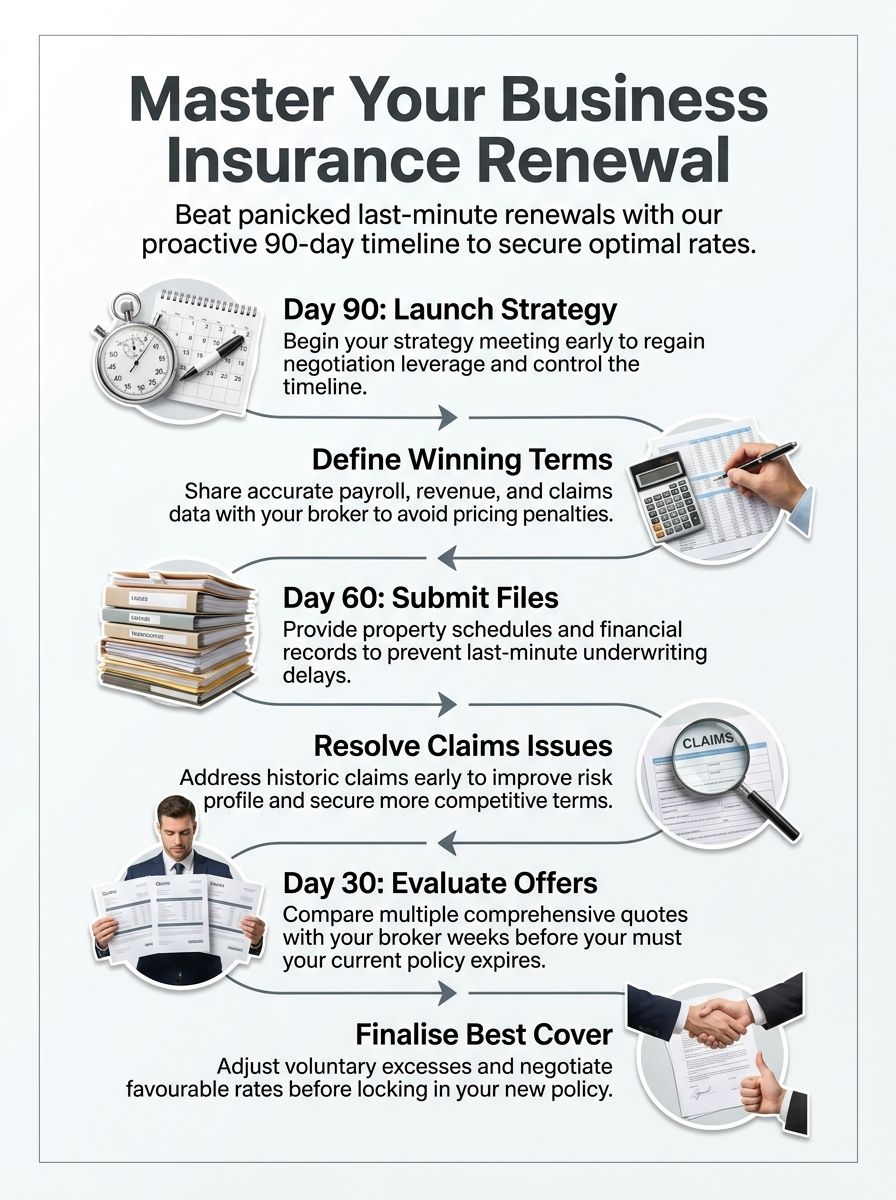
You start your insurance renewal process 90 days before your policy ends. This early start gives you time to gather information, compare quotes, and talk with your broker about what coverage you actually need.
When should you start the renewal strategy meeting?
Start your renewal strategy meeting roughly 90 days before your insurance expiration date. This timing gives you real breathing room to make smart choices without panic. Two weeks or one month before expiration just does not cut it. For UK special insurance (including AD Plants,) David McDonald will help you with the insurance renewal process. You can contact him here.
That rushed timeline forces you into tough corners where you lose bargaining power and end up paying more. Think of it like booking last-minute travel insurance or impounded vehicle insurance when you need cover urgently. You get stuck with whatever rates the market offers.
Starting early means you control the pace, not the clock.
Your broker must understand what a win looks like for your business during this 90-day window. They need your actual story, including revenue, payroll, vehicles, locations, claims history, and any service frustrations. Insurers base their pricing on the information you give them, so outdated details lead to higher prices or tough terms.
Early engagement through your broker opens doors for proper negotiation and fairer quotes. This proactive approach transforms your renewal from a scramble into a structured process where you make the decisions.
One broker used a clear timeline to manage a mid-size service business renewal and achieved strong results. Here is exactly how it looked:
- Day 90: Strategy meeting sets expectations and identifies business changes
- Day 85: Broker orders updated loss runs and payroll records
- Day 60: All documents sent to underwriters
- Day 45: Two underwriters requested clarifications; responses delivered within five days
- Day 30: Three competitive quotes arrived on the desk
- Day 21: Negotiation and policy adjustments begin
- Day 14: Final decision made and contracts exchanged
The broker explained: “A clear timeline and documented handoffs kept everyone aligned so we received multiple quotes well before expiry.” This structured cadence prevents the panic that derails most renewals and gives you genuine choices when decisions matter most.

How can early engagement with insurers help?
Early engagement with insurance carriers gives your broker time to identify exactly what they need from you. Insurers ask for many documents before they can offer their best rates. These typically include:
- Updated applications, payroll figures, and revenue numbers
- Loss runs, property schedules, and vehicle schedules
- Financial records and written explanations of past claims
- Safety updates, Health and Safety Executive (HSE) risk assessments, and ESG compliance reports
According to current UK commercial underwriting trends, underwriters are increasingly strict about requiring up-to-date HSE risk assessments and ESG (Environmental, Social, and Governance) compliance documents before offering the best commercial rates. Getting this information in early is not just good practice. It is an operational necessity in today's market.
Your broker must contact carriers right after your strategy meeting to find out what paperwork matters most. This stops delays that wreck your renewal timeline. Underwriters stay busy with many clients, so late or incomplete submissions simply do not get priority treatment.
Getting your information to insurers about 60 days before your policy expires means your broker can fix any issues without stress. If an insurer needs more details about a past claim or wants fresh safety information, you have time to gather it properly.
Your broker acts as a bridge between you and the insurance company, providing context that helps underwriters understand your business better. This proactive communication prevents the rushed feeling that comes with last-minute renewals. You avoid the scramble, the errors, and the costly oversights that happen when everything gets squeezed into a few days.
What role does proactive communication play in smooth renewals?
Your broker talking to insurance carriers early makes all the difference. They clarify what information you need to provide, so no surprises appear at the last minute. This early conversation means carriers start working on your renewal terms sooner rather than later.
You get your quotes two to four weeks before your policy expires. That gives you real time to ask questions and compare your options properly.
Good brokers keep the lines open throughout the process, making sure nothing gets lost. They act as your bridge between you and the insurance company, translating what each side needs. This stops the rush and stress that come with last-minute renewals.
- Ask your broker when they submitted your information to carriers, not just what the final price was
- This question reveals whether they started early or waited until the last moment
- Late paperwork causes delays, and delays cost you money and peace of mind
Brokers who communicate proactively ensure the submission timeline gets met, which means timely renewal quotes arrive on schedule. Strong communication shifts the power back to you, the business owner, instead of letting the carrier call all the shots.
You stay in control of your decisions. Your budget stays protected.
How do good brokers provide valuable context and insight?
Good brokers act like your personal weather forecast for the insurance market. They spot trends before your renewal papers land on your desk, telling you which companies are raising rates, which ones are expanding coverage, and which business classes face tighter restrictions.
This means you get the full picture early, not just a shock when the bill arrives. Your broker shares that knowledge so you understand exactly why premiums might jump or stay flat. According to standards set by the British Insurance Brokers' Association (BIBA), brokers are required to conduct a “fair analysis of the market” for their clients. That standard is mathematically impossible to meet in a rushed window. It requires adequate lead time to engage multiple insurers, compare their terms, and secure the best possible coverage on your behalf.
That context makes all the difference. Clients who know the reason behind a price increase report the same level of satisfaction as those who see no increase at all. It is not the number that stings you; it is being blindsided by it.
A review of 40 broker-client renewals showed a clear pattern. Cases where brokers initiated insurer contact within 85 to 90 days resulted in quotes arriving an average of 28 days before expiry. Where contact began within 30 days, quotes arrived just 3 days before expiry on average. One broker observed: “Early insurer engagement consistently shifts quote delivery from last-minute to comfortably in advance.” That difference gives you weeks to review terms, ask questions, and negotiate rather than hours to sign whatever appears on your desk.
Your broker transforms confusion into clarity. They explain which travel disruption risks are climbing, why winter sports coverage might cost more, or how cruise insurance trends are shifting. Armed with this information, you can prepare mentally and financially, just like a storm forecast lets you prepare before the rain arrives.
This partnership, combined with fair pricing, makes the whole renewal process smoother and less stressful. Your broker becomes your guide through the market, not just someone who sells you a policy.

Conclusion
Starting your insurance renewal process 90 days early stops costly surprises and gives your business real power in negotiations. Your strategy meeting at the 90-day mark sets everything in motion, allowing you to share accurate business information and clarify what cover you actually need.
Submitting complete documents 60 days before expiration lets insurers review your details without rushing, opening doors to better rates and genuine comparisons. Strong brokers become your trusted partners during this time, offering market insights that prepare you for rate changes before quotes arrive, so no premium increase catches you off guard.
Take action today by marking your calendar 90 days before your next renewal date. The time you invest now transforms stressful last minute insurance scrambles into calm, controlled conversations that protect your budget and your peace of mind.
FAQs
1. Why should businesses avoid last-minute insurance renewals?
Last-minute renewals often cost you more because you don't have time to shop around properly. Starting 90 days ahead gives you breathing room to compare policies, check details like gadget cover or cancellation terms, and spot better deals without the panic.
2. What is the 90-day strategy for insurance renewals?
It's simple: start your renewal process three months early instead of waiting until the last week. You get time to review your current policy, check reviews on Trustpilot, and find better rates without the pressure of a ticking clock.
3. How does Anaerobic Digestion Insurance fit into early renewal planning?
Anaerobic Digestion Insurance covers very specific risks like equipment breakdown and feedstock contamination, so it needs careful planning. Starting early lets you find the right policy without settling for a quick fix.
4. Can tools like Ghostery or browser plugins help during the renewal process?
Yes, tools like Ghostery or a noscript browser plugin can block trackers and cookies while you research policies online. This keeps your browsing safer and stops insurers from tracking your searches, which could affect the quotes you see.
5. What details should businesses check before renewing a policy?
Check things like pre-existing medical conditions cover if staff travel is involved, driving licence requirements, and whether the policy links to databases like AskMid for verification. Jake Lambert, a small business adviser, suggests always reading the fine print before signing anything.








 Verified by